South Korea’s English proficiency has been confirmed to be the highest among non-English-speaking countries in Asia. According to the EF English Proficiency Index (EPI) 2025, the world’s largest English proficiency assessment, South Korea ranked 48th globally and first among Asian countries that do not use English as an official language.
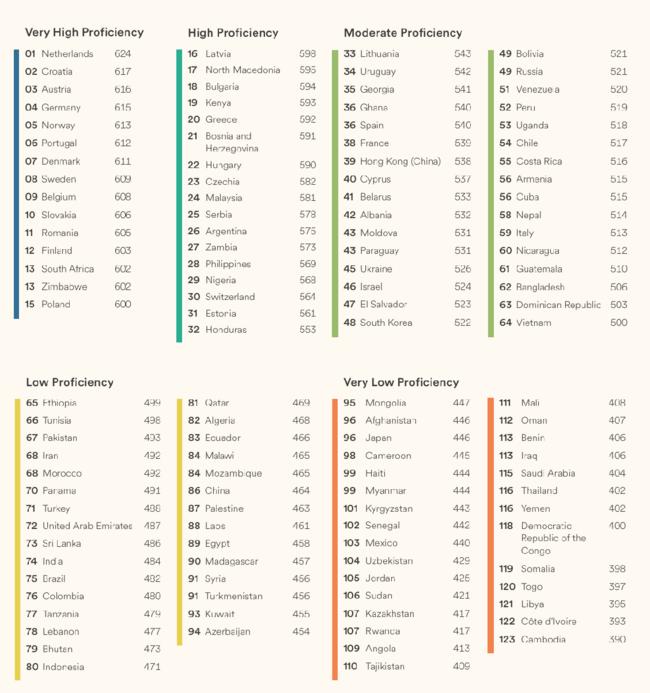 EF EPI 2025 Ranking of Countries and Regions (www.ef.com/epi)
■ Global Rank: 48th — No.1 in Non-English-Speaking Asia
In the latest EF EPI assessment, South Korea scored 522 points, placing it 48th worldwide.
Only three Asian regions ranked above South Korea: the Philippines, Malaysia, and Hong Kong.
However, these three share a crucial common feature — they all use English as an official or de facto official language.
- The Philippines designates English as an official language in its constitution.
- Malaysia uses English extensively in higher education, courts, and business, where it effectively functions as a practical working language.
- Hong Kong recognizes both Chinese and English as official languages with equal status.
When limiting the comparison to countries that do not use English as an official language, South Korea stands as the highest-ranking nation in Asia.
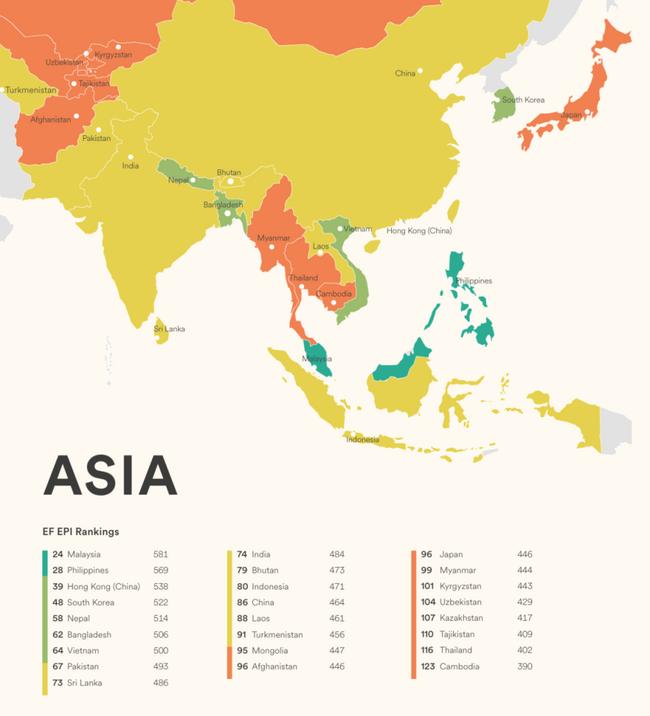 EF EPI 2025 Ranking of Asian Countries(www.ef.com/epi)
■ Clear Gap with Japan, China, and India
South Korea’s lead becomes more striking when compared to neighboring Asian countries:
- Japan: 96th place (446 points)
- China: 86th place (464 points)
- India: 74th place (484 points)
India’s case is particularly noteworthy. Despite adopting English as an official language, India scored lower than South Korea.
Experts attribute this to significant disparities in English usage, which remains concentrated among specific socioeconomic and educational groups, resulting in a lower national average.
In contrast, although English is not a part of daily life in South Korea, consistent nationwide education allows the country to maintain a stable and relatively high average proficiency.
■ Structural Strength Behind Korea’s Performance
Experts note that South Korea’s competitiveness in English is not merely the product of study hours but the outcome of broader social and economic structures.
Several key factors contribute to this performance:
- An export-oriented economy where English proficiency directly influences competitiveness
- Broad access to education nationwide
- The global expansion of K-content, increasing English usage across industries
- Rapid adoption of AI-powered and digital learning tools
- A steady rise in English requirements in universities and corporate sectors
These combined elements have positioned South Korea as one of the few non-English-speaking countries with a high national average in English proficiency.
■ AI Era Demands Stronger Speaking and Writing Skills
Challenges remain, however.
South Korea’s strengths lie mainly in reading and listening, while speaking and writing—productive language skills—still lag behind.
Language educators note that in the age of AI, practical communication skills are becoming more important than basic comprehension, emphasizing the need for educational reforms in teaching and assessment.
■ From Follower to Leader
The latest findings indicate that South Korea is no longer a “follower” in English education but a leader among non-English-speaking nations.
To maintain this advantage, experts stress the importance of shifting from quantitative learning to qualitative improvements, particularly in real-life communication skills.
South Korea’s English education now stands at a turning point—moving beyond expansion to deep, meaningful transformation.

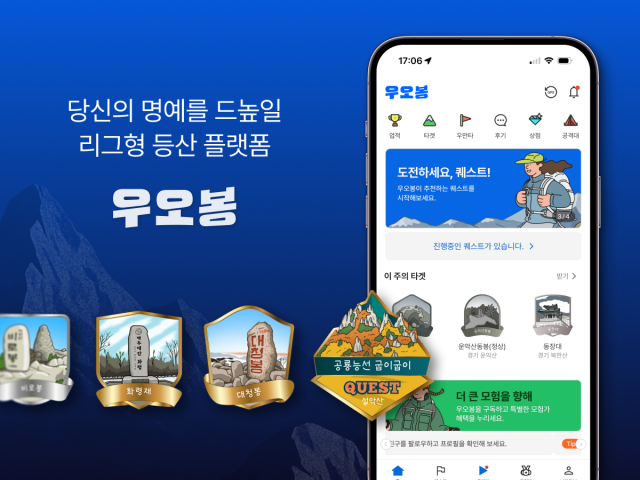 등산이 게임이 된다… 등산 앱 ‘우오봉’ 1기 캡틴 30인 공개 모집
등산을 단순한 운동이 아닌 ‘스포츠’와 ‘게임’으로 재해석한 신개념 등산 플랫폼이 등장했다. 우리봉우리(대표 임수영)는 12월 19일 ‘우오봉’의 오픈베타 서비스를 시작하며, 플랫폼 내에서 공격대를 결성하고 이끌어갈 ‘1기 캡틴(공격대장)’ 30명을 공개 모집한다고 밝혔다. ‘우리가 오를 봉우리’의 줄임말인 ‘우오봉’은 힐링과 친목 위주였던 기존 등산 문화에 전략, 협동, 정치, 경쟁 등 게임적 요소를 도입한 리그형 등산 플랫폼이다. 사용자는 단순한 등산객이 아니라 리그의 ‘캡틴’ 혹은 ‘대원’이라는 정체성을 갖고 자신만의 서사를
등산이 게임이 된다… 등산 앱 ‘우오봉’ 1기 캡틴 30인 공개 모집
등산을 단순한 운동이 아닌 ‘스포츠’와 ‘게임’으로 재해석한 신개념 등산 플랫폼이 등장했다. 우리봉우리(대표 임수영)는 12월 19일 ‘우오봉’의 오픈베타 서비스를 시작하며, 플랫폼 내에서 공격대를 결성하고 이끌어갈 ‘1기 캡틴(공격대장)’ 30명을 공개 모집한다고 밝혔다. ‘우리가 오를 봉우리’의 줄임말인 ‘우오봉’은 힐링과 친목 위주였던 기존 등산 문화에 전략, 협동, 정치, 경쟁 등 게임적 요소를 도입한 리그형 등산 플랫폼이다. 사용자는 단순한 등산객이 아니라 리그의 ‘캡틴’ 혹은 ‘대원’이라는 정체성을 갖고 자신만의 서사를
 Vin Chaud in France, Donguibogam Herbal Tea in Korea
When the French feel a chill coming on, they make Vin chaud, a warm wine simmered with cinnamon, cloves, apples, and oranges — a traditional winter drink that serves as Europe’s natural cold remedy.And in Korea? Koreans have traditional herbal tea.For generations, Koreans have brewed ginger tea, jujube tea, and Ssanghwa-cha to ward off the winter cold. The rising steam from a teacup filled with the scent of medicinal herbs is more tha...
Vin Chaud in France, Donguibogam Herbal Tea in Korea
When the French feel a chill coming on, they make Vin chaud, a warm wine simmered with cinnamon, cloves, apples, and oranges — a traditional winter drink that serves as Europe’s natural cold remedy.And in Korea? Koreans have traditional herbal tea.For generations, Koreans have brewed ginger tea, jujube tea, and Ssanghwa-cha to ward off the winter cold. The rising steam from a teacup filled with the scent of medicinal herbs is more tha...
 왜 하필 ‘12월 3일’이었나, 특검이 밝힌 이유는?
 환율 뉴스에 꼭 나오는 '통화 스와프', 한 번에 이해하기
 “탈모는 생존 문제”…이재명 대통령, 건강보험 적용 검토 지시
 ‘아기맹수’부터 선재스님까지…흑백요리사2 초반 시선 쏠린 5명
 [메인타임스×시한책방 서평] 디그니티 플랜 : 인권은 배려가 아니라 존엄의 계획이다!
 공무원 9급 시험이 완전히 바뀐다…PSAT 전환 추진에 수험가 ‘술렁
 <사설> 교통약자에게 좌석을 허하라

 목록
목록